
9 November 2026 . Slip testing
Slip Resistance Testing – What Happens During a Slip Test and Why Is It Important?
By Daniels Slip Testing
Understanding how slip resistance testing helps property owners, facility managers and businesses identify and manage slip hazards.
Slips, trips and falls remain a significant cause of injuries in commercial buildings, shopping centres, workplaces and public spaces. While cleaning procedures, warning signs and routine inspections are important components of slip prevention, they do not necessarily establish whether a pedestrian surface provides adequate slip resistance.
This is where professional slip resistance testing plays an important role.
Slip testing provides an objective measurement of a floor surface's slip resistance, helping property owners and managers identify potentially hazardous surfaces, assess existing controls and make informed decisions about managing slip risks.
What Is Slip Resistance Testing?
Slip resistance testing is a process used to measure the resistance a pedestrian surface provides against slipping.
In Australia, testing of existing pedestrian surfaces is commonly undertaken in accordance with AS 4663:2013 – Slip resistance measurement of existing pedestrian surfaces.
The standard provides recognised testing methods for assessing the slip resistance of flooring already installed in buildings and other pedestrian environments.
One of the most commonly used methods is the wet pendulum test.
How Is a Wet Pendulum Slip Test Performed?
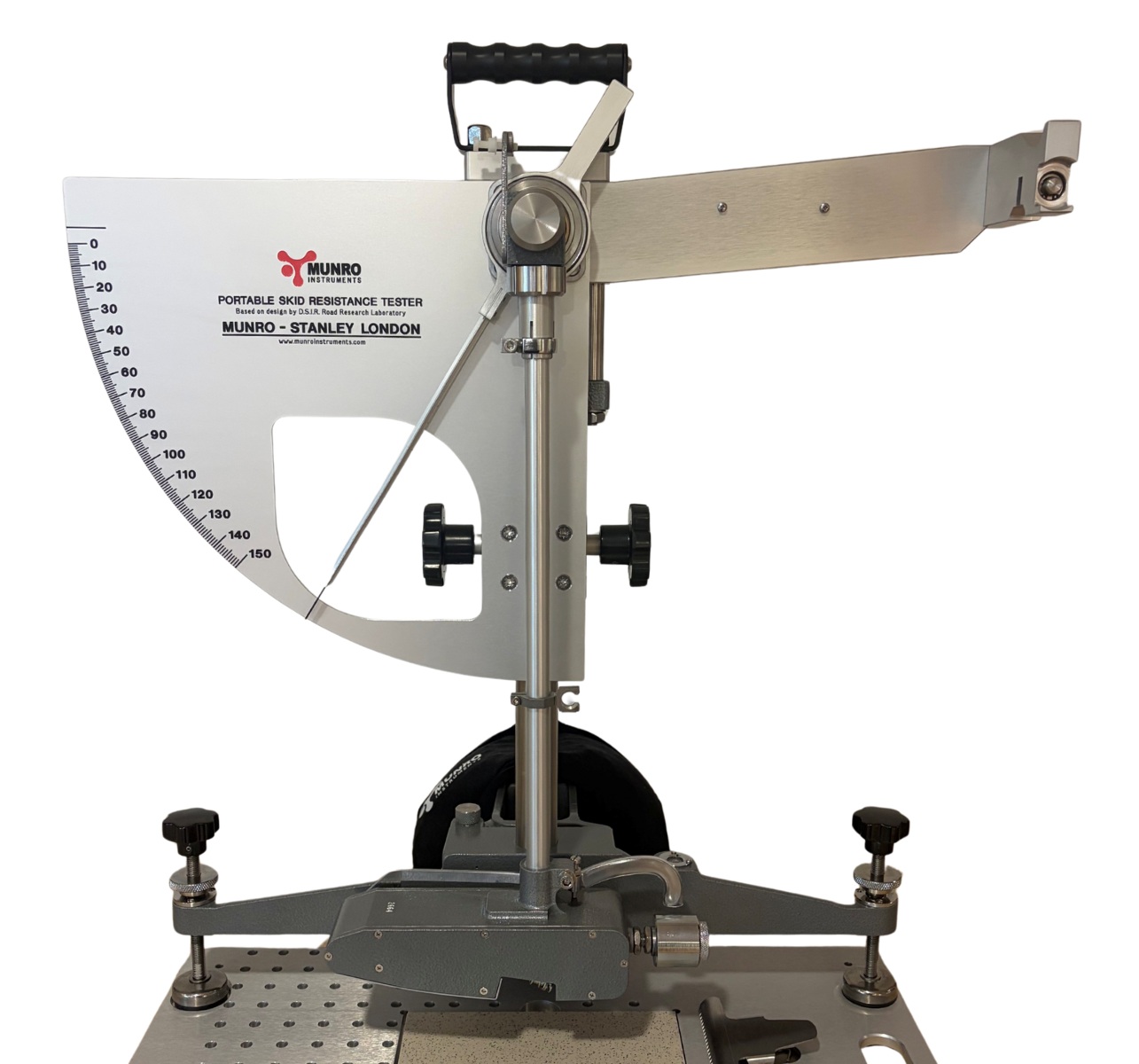
The wet pendulum test uses a specialised instrument designed to simulate the contact between a shoe heel and a pedestrian surface.
The instrument consists of a swinging arm fitted with a standardised rubber slider. As the pendulum swings across the floor, the slider contacts the surface and loses energy due to friction.
The amount of energy lost (or the more resistance rubber slider has when contacting the floor) provides an indication of the slip resistance of the tested surface.
At the top of the scale is a zero (0) reading, which the pendulum should achieve during a free swing through the air without contacting the floor surface.
When the pendulum slider makes contact with the floor, friction reduces the momentum of the pendulum arm, preventing it from reaching the same height on its return swing. As the scale increases in a downward direction, greater friction between the slider and the floor results in a greater loss of momentum and a higher slip resistance reading.
Understanding Slip Resistance Ratings
Wet pendulum test results are commonly classified under AS 4586:2013, which establishes slip resistance classifications for pedestrian surface materials.
The wet pendulum classifications range from P0 to P5.
Classification
General indication
Typical recommendation
P5
Very high slip resistance
Exterior ramps and sloping pedestrian surfaces with gradients steeper than 1:14. Examples include steep external ramps, sloping paving and some commercial kitchen areas.
P4
High slip resistance
Most exterior pedestrian surfaces with gradients of 1:14 or flatter, including outdoor paving, walkways and tiled areas exposed to rain.
P3
Moderate slip resistance
Interior surfaces likely to become wet during normal use, including bathrooms, changerooms, kitchenettes and laundries.
P2
Low slip resistance
Transitional areas and areas requiring higher than P1 e.g. Hospital and Aged Care corridors.
P1
Very low slip resistance
Interior surfaces that can normally be maintained dry and are located away from external entrances or other sources of water. These include many smooth or polished flooring materials, such as stone, terrazzo, ceramic tiles, timber and vinyl.
P0
Lowest slip resistance classification
Similar to P1 but higher risk of slipping when wet.
Important qualification: These are simplified, illustrative descriptions rather than a definitive allocation of P-ratings under Australian Standards.
A higher P-classification generally indicates greater measured slip resistance. In simple terms, the recommended P-classification for a pedestrian surface is largely influenced by the likelihood of the surface becoming wet or contaminated during normal use. Areas where water or other contaminants are more likely to be present generally require a higher P-classification and, consequently, a higher level of slip resistance to reduce the risk of slipping.
However, the appropriate classification also depends on the nature of the pedestrian activity, the type of contamination and the foreseeable conditions of use.
Why Should Existing Floors Be Tested?
Floor surfaces can change significantly over time.
Regular pedestrian traffic, cleaning chemicals, surface wear, polishing, contamination and maintenance practices can all influence slip resistance.
A floor that performed satisfactorily when originally installed may not necessarily maintain the same slip resistance throughout its service life.
Slip resistance testing can assist property managers in:
Identifying flooring that may present an increased slip risk.
Assessing the condition of existing pedestrian surfaces.
Evaluating the effectiveness of cleaning and maintenance practices.
Investigating areas where slips or falls have occurred.
Supporting decisions about flooring treatments or replacement.
Maintaining documented evidence of a proactive risk management program.
Importantly, slip testing should not be viewed as a substitute for routine inspections, cleaning procedures or other safety controls. It is one component of a broader slip prevention strategy.
What Happens if a Floor Has a Low Slip Resistance Rating?
A low slip resistance result does not automatically mean that a floor must be replaced.
Instead, the result should prompt consideration of the risks associated with the location and how those risks can be effectively controlled.
Depending on the circumstances, appropriate measures may include reviewing cleaning procedures, improving water management, installing entrance matting, applying suitable surface treatments or replacing flooring where necessary.
The objective is not simply to achieve a particular test result, but to manage the risk of people slipping under reasonably foreseeable conditions.
Slip Testing and Legal Risk Management
Following a slip and fall incident, questions may arise about whether a property owner or occupier took reasonable steps to identify and manage foreseeable hazards.
Slip resistance testing can provide valuable objective evidence about the condition of a pedestrian surface.
However, test results should be considered alongside other evidence, including cleaning records, inspection procedures, environmental conditions, incident reports and the circumstances of the fall.
A slip resistance test does not, by itself, establish negligence or determine legal liability.
For property managers, a documented testing program can form part of the evidence demonstrating that pedestrian safety risks are being actively assessed and managed.
How Often Should Slip Resistance Testing Be Undertaken?
There is no single testing frequency suitable for every building or pedestrian surface. However higher traffic shopping centres are often tested on a quarterly (3-month) basis and other types of commercial buildings are generally tested annually.
The appropriate frequency should be determined by the risks associated with the location, the nature of pedestrian traffic, environmental exposure, flooring condition and previous incident history.
Higher-risk locations, such as building entrances exposed to rainwater, may warrant more frequent assessment than relatively low-risk internal areas.
Additional testing may also be appropriate following flooring treatments, changes to cleaning procedures, significant surface deterioration or reported slip incidents.
Conclusion
Slip resistance testing provides property owners, facility managers and businesses with objective information about the condition and performance of pedestrian flooring.
When combined with effective cleaning, inspection, maintenance and hazard management procedures, testing can contribute to a more comprehensive approach to preventing slips and falls.
The important question is not simply whether a floor has been tested, but whether the results have been properly understood and used to manage the risks associated with that surface.