
March 2026 . Standards . Pendulum Test
Understanding Pendulum Slip Testing: What the Numbers Actually Mean
By Daniels Slip Testing
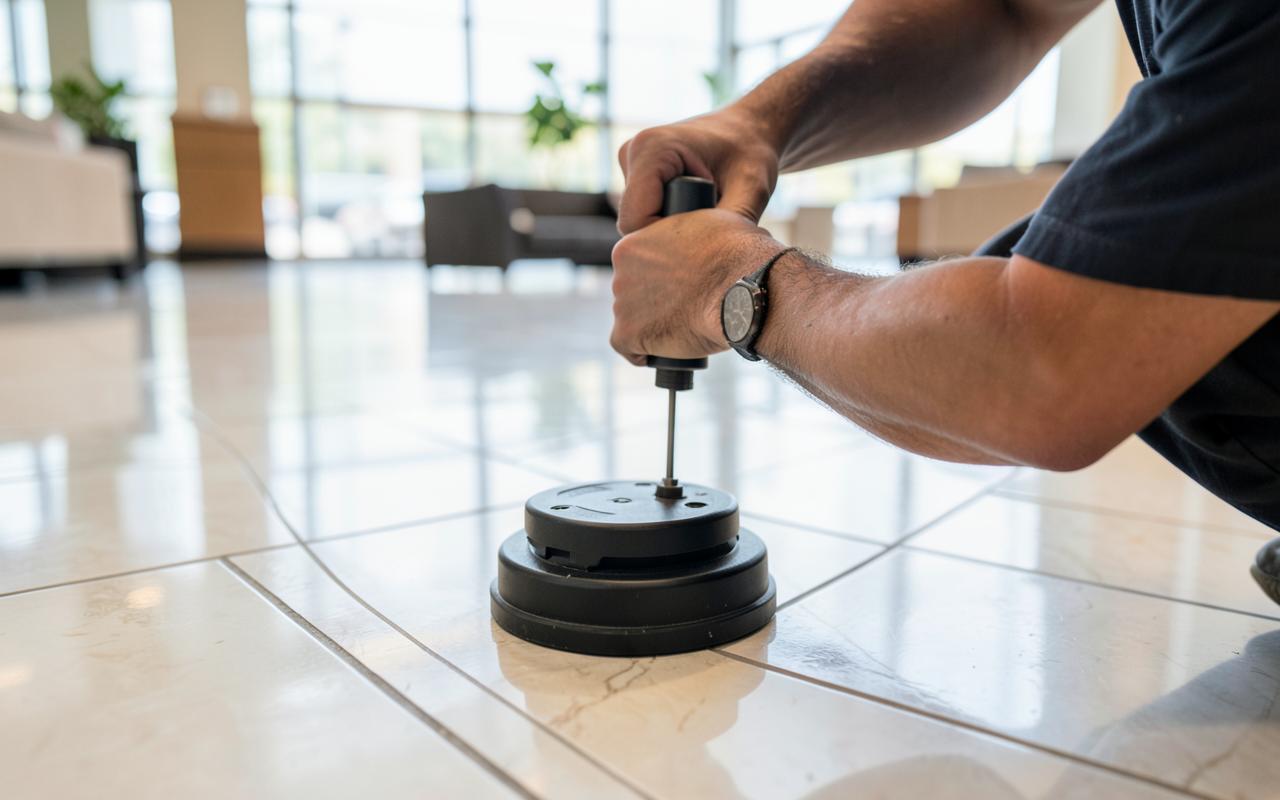
The pendulum test is the benchmark for slip resistance in Australia. Here is how the result is produced, what the classifications mean, and how to read a report with confidence.
The wet pendulum test described in AS 4586 and AS 4663 is the primary method used across Australia to measure how much friction a pedestrian surface offers when it is wet. It remains the benchmark because it reproduces the way a heel strikes the floor rather than simply dragging a weight across it.
How the test works
A weighted arm carrying a standardised rubber slider swings across a wetted section of floor. The energy the slider loses to friction is recorded as a British Pendulum Number, and the mean of several swings becomes the reported value for that location.
Reading the classification
Results are grouped into classifications from P0 through P5. A higher class means more available friction when the surface is wet. The right target depends on the application: an external ramp, a shower floor and a dry retail aisle are all held to different expectations.
- Test locations should represent real pedestrian paths, not convenient corners.
- Surfaces change with wear, sealing and cleaning chemistry, so results are a snapshot in time.
- A single number without context is of little use in a dispute.
What a good report includes
A defensible report records the slider type, the number of swings, surface condition, temperature, photographs and a clearly marked plan of each test location. That detail is what makes the result usable months or years later.
If you are unsure whether a floor in your building meets the classification it was specified to, an on-site test gives you a documented answer.