
February 2026 . Hospitality . Wet Areas
Wet Areas Are Where Claims Begin: Bathrooms, Showers and Pool Surrounds
By Daniels Slip Testing
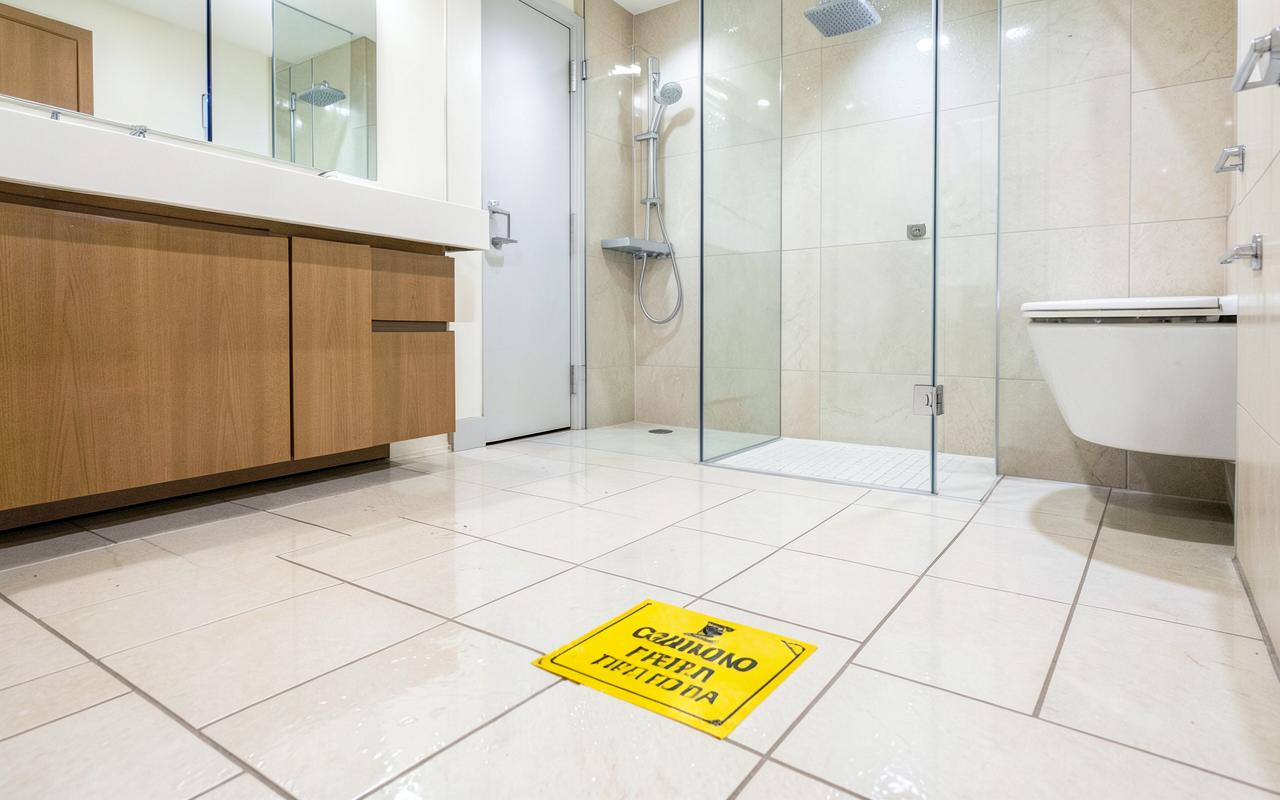
Most slip claims in accommodation buildings trace back to a wet area. Testing and simple maintenance decisions make the difference between a defensible floor and a liability.
Bathrooms, ensuites, change rooms and pool surrounds combine everything that causes a slip: water, bare or soft-soled feet, soap residue and often a small fall to the drain. It is no surprise that these spaces generate a disproportionate share of injury claims in hotels, gyms and residential buildings.
Specify for the wet condition
A tile that performs well in a showroom can be marginal once water and body wash are involved. Wet areas should be specified against their wet classification, with barefoot ramp testing considered for showers and pool decks.
Maintenance quietly changes the floor
Soap film, incorrect detergents and polishing pads can all lower slip resistance on a surface that originally complied. Reviewing the cleaning regime is often cheaper and faster than replacing the floor.
- Test after any change to the cleaning product or method.
- Keep drainage falls clear so water does not pond on the walking line.
- Record the condition of the floor at handover so later wear can be measured against it.
Documentation matters
When an incident occurs, the question is rarely whether the floor was wet. It is whether the operator knew the slip resistance and acted reasonably. Periodic testing answers that question in writing.